

Imagine watching your child struggle to button their school shirt or pull away from a birthday party because the noise feels like too much. It's a quiet heartbreak that many Melbourne parents carry, often while feeling the weight of silent judgement from others in the schoolyard. You aren't alone in wanting a life where your child feels steady, capable, and understood. We know that behind every NDIS form and developmental milestone is a family looking for a partner who sees their child's dignity first.
This guide explains how paediatric occupational therapy supports your child's development, from refining fine motor skills to mastering emotional regulation. We'll show you how a compassionate, person-centred approach can turn daily struggles into moments of success. By the end of this article, you'll have practical strategies for a calmer home life in suburbs like Niddrie or Essendon. You will also find a clear roadmap for navigating NDIS functional capacity assessments, ensuring you feel informed and confident about the next steps in your child's journey.
Key Takeaways
- Learn how paediatric occupational therapy focuses on your child's "occupations," such as playing, making friends, and managing daily self-care tasks.
- Discover how supporting motor skill development can improve your child's confidence when they're at school or playing in local parks.
- Get a clear roadmap for the NDIS process, including how Functional Capacity Assessments help document your child's unique strengths and needs.
- Explore why parent coaching and a local connection to the Melbourne community are vital for creating a calmer, more supportive home environment.
What is Paediatric Occupational Therapy?
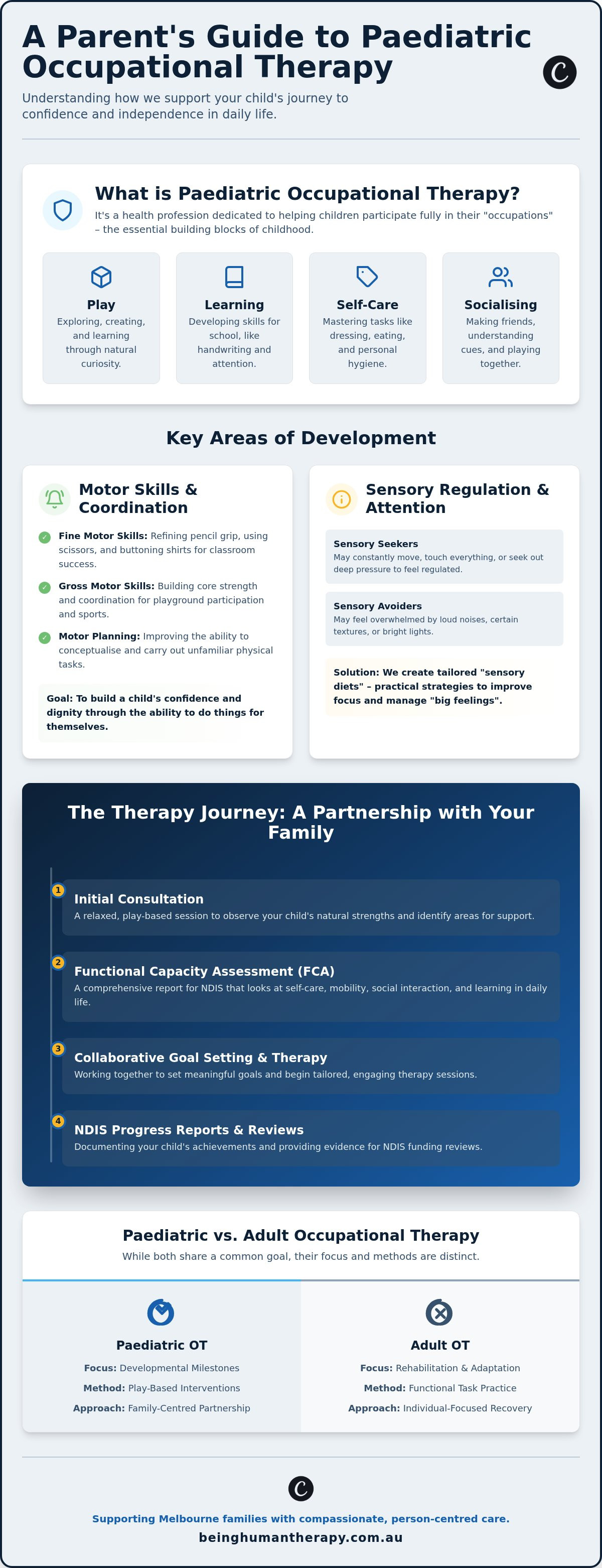
In its simplest form, What is Occupational Therapy? refers to a health profession that helps people participate in the activities they do every day. For a child, these "occupations" aren't jobs or careers; they're the essential building blocks of childhood. Play, learning at school, socialising with peers, and mastering self-care tasks like dressing or eating are the primary ways children interact with their world.
At Being Human, we move away from the traditional medical model that focuses on "fixing" a deficit. Instead, we believe paediatric occupational therapy should be about supporting and honouring each child's unique identity. This period of life is critical because of neuroplasticity, the brain's incredible ability to reorganise itself by forming new neural connections. By providing the right support early, we help children build the functional skills and confidence they need for long-term independence.
The Difference Between Paediatric and Adult OT
While adult OT often focuses on rehabilitation after an injury, paediatric support is centred on developmental milestones. We use play-based interventions because play is a child's natural language. It sparks their curiosity and makes learning hard skills feel like an adventure. We also treat the family unit as partners, ensuring strategies work within the reality of your Melbourne home life.
Who Can Benefit from Occupational Therapy?
Many families we support in Niddrie and Essendon have children with formal diagnoses like Autism, ADHD, or Global Developmental Delay. However, paediatric occupational therapy is also for any child struggling with specific functional tasks. This might include:
- Difficulties with handwriting, zips, or using cutlery.
- Challenges with playground coordination and gross motor skills.
- Neurodivergent children seeking sensory regulation strategies to feel calmer and more regulated.
Key Areas of Development in Paediatric OT
Development isn't just about hitting a mark on a chart. It's about how your child feels when they try to join a game at a Keilor playground or sit at their desk in Niddrie. Understanding the Key Areas of Development in Paediatric OT helps us see the connection between physical skills and emotional wellbeing. We look at the whole child, ensuring they have the tools to participate fully in life through a compassionate lens.
Motor Skills and Coordination
Handwriting is often a parent's first concern, but we look beyond "neatness" to the motor planning required to form letters. School readiness involves mastering several key foundations:
- Refining pencil grip and scissor skills for the classroom.
- Building core strength for playground participation.
- Improving coordination for sports and physical play.
When a child feels coordinated, they're more likely to engage with their peers confidently. These skills aren't just about physical ability; they're about the dignity of being able to do things for oneself. Our approach to paediatric occupational therapy ensures these milestones are met through engaging, play-based activities.
Sensory Regulation and Attention
Children perceive the world in vastly different ways. Some are sensory seekers, constantly moving or seeking out deep pressure, while others are avoiders who feel overwhelmed by the hum of a classroom or the texture of certain clothes. Through paediatric occupational therapy, we help identify these unique sensory profiles. We might collaborate with you to create a "sensory diet" for home or school to improve focus and attention. These practical strategies help manage "big feelings" and make transitions between activities much smoother for the whole family. If you're noticing these challenges, our clinic-based sessions in Niddrie provide a supportive space to explore tailored strategies for your child.
The Journey: From Assessment to NDIS Progress Reports
Starting therapy can feel like stepping into a maze of paperwork and clinical terms. We believe the path to paediatric occupational therapy should feel like a partnership rather than a series of hurdles. Our journey begins with an initial consultation where we observe your child in a relaxed, play-based environment. This helps us see their natural strengths and where they might need a little extra support.
Understanding Functional Capacity Assessments
A Functional Capacity Assessment (FCA) is more than just a checklist. It's a comprehensive look at how your child manages daily life, including self-care, mobility, social interaction, and learning. A high-quality OT report is vital for NDIS funding reviews because it provides the evidence needed to secure ongoing support. We focus on capturing the whole child, ensuring the NDIS sees the person behind the labels. This ensures that funding aligns with the practical needs of your family in suburbs like Essendon or Moonee Ponds.
The Role of Progress Reports
Once therapy begins, we set collaborative goals that actually matter to your home life. Whether it's making a friend at school or getting dressed independently, we track both "soft" and "hard" goals. Progress reports are essential tools that facilitate communication between our OTs, your GP, and your child's teachers. They provide the data needed to advocate for your child’s needs during school meetings or NDIS plan reviews. Regular monitoring ensures our clinic-based sessions in Niddrie stay focused on what brings the most joy and independence to your child’s life. By working together, we ensure every report reflects the steady growth and dignity of your child’s development.
Beyond the Clinic: Parent Coaching and School Support
While clinic-based sessions in Niddrie provide a focused space for skill-building, they are only one piece of the developmental puzzle. Real growth occurs in the moments between appointments, such as during the morning rush or in the middle of a busy school day. We view paediatric occupational therapy as a collaborative journey that extends into your child's natural environments. By bridging the gap between the therapy room and the classroom, we ensure that the progress we see in the clinic translates into a joyful, independent life at home.
Parent Coaching and Education
You are the expert on your child's life. Our parent education and coaching sessions aim to empower you by reframing "behaviour" as a vital communication of an unmet sensory or emotional need. Instead of focusing on compliance, we look for ways to support your child's dignity. We provide practical home-based strategies for daily tasks like dressing, feeding, and toileting. These steady, empathetic supports are designed to reduce parental stress and create a calmer, more predictable home life for families across Moonee Ponds and Essendon.
School and Kindergarten Visits
The classroom is a complex sensory environment that can sometimes feel overwhelming. Our paediatric occupational therapy support includes visiting your child’s learning space to understand their unique challenges. We collaborate with teachers in suburbs like Keilor Park or Airport West to suggest inclusive modifications. This might include:
- Introducing wobble stools or sensory cushions for better focus.
- Implementing visual schedules to ease transitions between subjects.
- Developing motor planning strategies for physical education and play.
These visits are especially helpful when supporting the transition to primary school. If you want to move beyond clinic walls and support your child's learning journey, learn more about our school and kindergarten support services.
Choosing the Right Paediatric OT in Melbourne’s Northwest
Choosing a provider for paediatric occupational therapy is a deeply personal decision. You aren't just looking for a set of clinical qualifications; you're looking for a partner who truly connects with your child's unique personality. A "good fit" therapist acts as a steady bridge between specialised therapeutic knowledge and your family's daily reality. Local expertise also matters. Understanding the specific school landscape and community resources in Niddrie and Essendon allows us to provide targeted support that reflects the world your child navigates every day. At Being Human, we value professional integrity and inclusivity, ensuring every family feels seen, heard, and respected.
Our Niddrie Clinic: A Space for Growth
Our clinic is thoughtfully designed to feel like a welcoming home rather than a sterile medical facility. We believe that a warm, nurturing environment helps children feel safe enough to explore, learn, and grow. Conveniently located for families in Essendon, Strathmore, and Moonee Ponds, we focus exclusively on one-on-one, individualised care. This allows us to tailor every session to your child's specific sensory needs and motor skill goals while honouring their dignity and personal strengths.
Getting Started with Being Human
We aim to make the intake process as straightforward and stress-free as possible for busy caregivers. When you visit us for the first time, it's helpful to bring any current NDIS plans or previous developmental reports from school or other health professionals. These documents help us understand the journey you've already taken and ensure our collaborative goals are perfectly aligned with your family's needs. We are here to guide you through the next steps with steady, empathetic support and a clear roadmap for success. If you're ready to begin, Book a consultation at our Niddrie clinic today.
Supporting Your Child's Next Steps in Melbourne
Navigating your child's development can feel like a complex journey, but you don't have to walk it alone. We've explored how paediatric occupational therapy focuses on the essential "occupations" of childhood, from mastering fine motor skills to finding calm through sensory regulation. By combining clinic-based sessions in Niddrie with parent coaching and school support, we create a steady foundation for your child to feel capable and confident in their everyday life. We specialise in NDIS Functional Capacity Assessments, providing the professional reporting you need to advocate for your child's future across Northwest Melbourne suburbs like Essendon and Moonee Ponds.
Our compassionate, person-centred approach ensures that your child's dignity remains at the heart of every session. Whether you're just starting out or looking for a therapist who feels like a "good fit", we are here to support your family's unique goals. Begin your child’s journey with Being Human; contact our Niddrie clinic today. You have the strength to lead your family, and we are honoured to be your partner in this process.
Frequently Asked Questions
How do I know if my child needs occupational therapy?
You might notice your child struggling with daily "occupations" like play, self-care, or school tasks. Common signs include difficulty with fine motor tasks like using cutlery, sensory sensitivities to noise or clothing, or trouble with coordination on the playground. If developmental milestones seem delayed or your child feels frustrated by basic skills, a consultation can provide clarity and support for their functional growth.
Do I need a referral from a GP to see a paediatric OT in Melbourne?
You don't strictly need a referral to access paediatric occupational therapy at our clinic. However, seeing your GP is helpful to discuss a Chronic Disease Management Plan. This plan allows you to access a Medicare rebate for up to five allied health sessions per calendar year. Having this documentation ready can streamline the intake process and help us coordinate care with your local doctor or paediatrician.
How long does a typical paediatric OT session last?
Most clinic-based individual sessions last approximately 45 to 60 minutes. This timeframe allows enough space for a warm-up, focused therapeutic activities, and a brief wrap-up with parents to discuss home strategies. We find this duration respects a child's attention span while ensuring we make meaningful progress toward their goals. The exact length may vary based on your child's specific needs and regulation levels during the day.
Can I use my NDIS funding for occupational therapy at Being Human?
Yes, you can use your NDIS funding for paediatric occupational therapy if you are self-managed or plan-managed. We specialise in supporting NDIS participants through individualised therapy and comprehensive Functional Capacity Assessments. Our team ensures all reporting aligns with current NDIS requirements, helping you advocate for the right level of support. This funding covers direct therapy sessions, travel, and the detailed reports needed for plan reviews.
What is the difference between an OT and a physiotherapist for kids?
While both professions support movement, OTs focus on how physical skills impact daily "occupations" like dressing, writing, and playing. We look at fine motor skills, sensory processing, and emotional regulation. Physiotherapists generally focus more on gross motor skills, strength, and gait. Often, the two professions work together to help a child move confidently through their world. We focus on the functional "why" behind every movement your child makes.
How many sessions will my child need before we see progress?
Progress is unique to every child and depends on their specific goals and the complexity of their needs. Some families notice small, positive shifts in regulation or confidence after just a few sessions, while mastering physical skills like handwriting often takes longer. We work in therapy blocks to monitor growth and adjust strategies. Consistency at home and school is the most significant factor in seeing steady, long-term functional success.
Do you offer school or kindergarten visits in the Essendon area?
We certainly do. Our therapists regularly visit schools and kindergartens in Essendon, Niddrie, and surrounding Northwest Melbourne suburbs. These visits allow us to observe your child in their natural learning environment and collaborate directly with teachers. We can then suggest practical classroom modifications, such as sensory tools or visual schedules, ensuring the support your child receives in the clinic translates effectively to their daily school and social life.
What should I tell my child about their first OT appointment?
It's best to describe the first session as a chance to meet a new friend who helps kids learn through play. You can tell them they'll be doing fun activities like games, drawing, or obstacle courses. Avoid using medical terms that might cause anxiety. Letting them know that the therapist wants to hear about what they like to do helps them feel comfortable and respected from the very first moment.